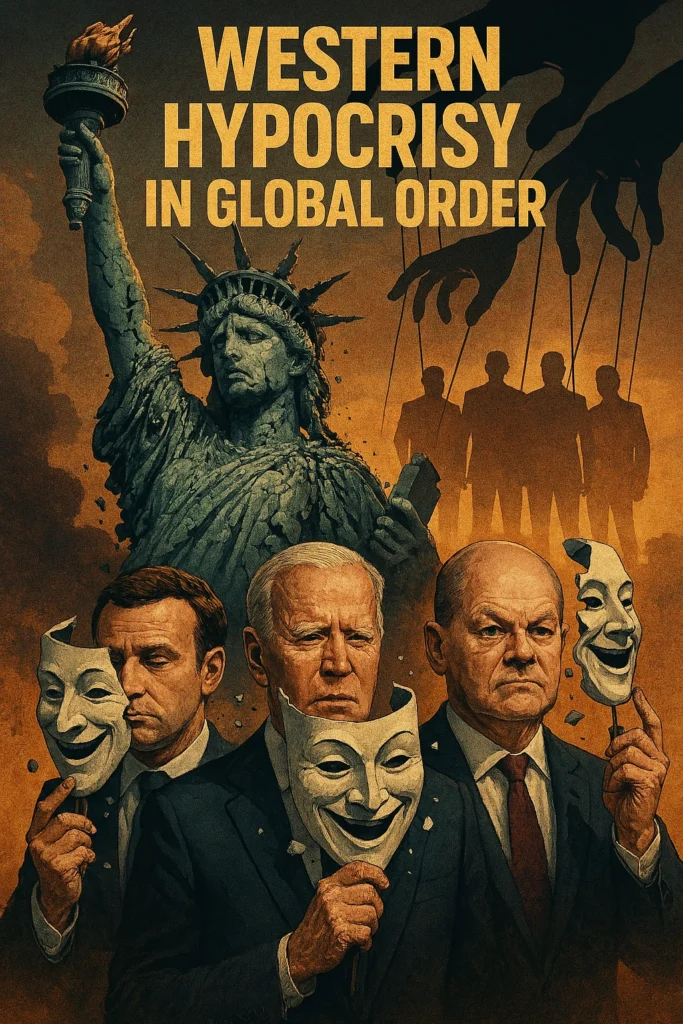
Introduction: The Repair Job of the Decade
NATO Secretary General Mark Rutte arrived in Washington on June 24, 2026, carrying what diplomats do not usually carry to the Oval Office: charts. Bold, golden, red-font charts showing record defense spending by European allies. Charts designed — explicitly — to make Donald Trump feel like the greatest NATO leader in history.
This is the state of the world’s most powerful military alliance in 2026: its survival depends partly on flattery.
But beneath the charm offensive lies a real and urgent crisis. The Iran war exposed fissures in NATO that neither diplomacy nor spending charts can easily paper over. The July 7–8 summit in Ankara, Turkey, is the moment of reckoning.
What Triggered the Current Crisis
Relations between the Trump administration and Europe remain fractious over the war in Iran, with the U.S. cutting its European defense commitments drastically.
The flashpoint came when several NATO members refused to support Washington’s Iran campaign. Several European countries initially refused to allow U.S. forces access to bases for refueling and operations related to the conflict. Trump responded by publicly rebuking allies he felt had failed to support the campaign, calling NATO a “paper tiger” and threatening to punish nations he deemed unhelpful.
Spain proved especially contentious — refusing access to air bases and triggering direct economic threats from Trump. The UK initially refused access but relented for “defensive” strikes. The resulting rupture was NATO’s worst internal crisis since the 2003 Iraq war, and arguably deeper.
What Rutte Is Bringing to Trump
According to alliance sources, Rutte will be on a charm offensive, armed with details of record defense spending across the alliance in response to Trump’s exacting demands. He will also point to positive activity in the U.S. jobs market as defense production increases to meet new demand from Europe and Canada.
On the specific question of European non-participation in the Iran war, Rutte has already begun his reframing operation. In an interview with Fox News, Rutte described the incidents of some NATO members denying U.S. basing and overflight rights as “isolated,” saying hundreds of U.S. planes took off from U.S. bases across Europe to support Washington’s war.
The NATO spending headline: at last year’s Hague summit, allies committed to spending 5 percent of GDP on defense and defense-related measures within a decade — a threshold strongly championed by Trump. Rutte will present evidence that this commitment is being met.
The Military Drawdown: What the U.S. Is Pulling Back
Beyond the rhetorical friction lies a concrete restructuring of American military commitments. Defense Secretary Pete Hegseth announced a six-month review of U.S. troop deployments in Europe that could result in some reductions of American forces. The Pentagon has informed allies it intends to scale back long-range strike aircraft such as B-2 and B-52 bombers and reduce the number of F-16 and F-35 fighter jets available for NATO missions.
The U.S. also recently cut the number of fighter jets and warships it would deploy for NATO’s response in the early stages of a conflict — leaving members grappling with how to fill gaps.
This is not just a budgetary adjustment. It is a strategic message: European defense is increasingly Europe’s problem.
The Ankara Summit: Opportunity or Crisis?
Allies will gather in Ankara at a critical moment. NATO faces a war in Europe, renewed instability in the Middle East, and growing internal tension over priorities, burdens, and risk. NATO has endured disputes before, but a lack of unity — if left unmanaged — can weaken deterrence as effectively as military shortfalls.
Alliance unity has been challenged by two episodes in 2026: Trump’s proposal to take control of Greenland, and the reluctance of European allies to support U.S.-Israeli strikes against Iran.
The Atlantic Council has proposed five ideas to make Ankara a success, including constructive proposals from European leaders on Greenland and Arctic governance — reframing Trump’s maximalism into workable alliance policy.
Why Congress Has Protected NATO
One often-overlooked factor: it remains unlikely that Trump could legally pull the United States out of NATO. That is one of the few ways in which Congress Trump-proofed the U.S. government between his first and second terms. Thanks in part to now-Secretary of State Marco Rubio when he was a senator, Congress in 2023 passed a provision requiring it to sign off on any withdrawal.
The American public, meanwhile, remains strongly pro-NATO. An AP-NORC poll from February showed 70% of Americans said being a NATO member was “very” or “somewhat” good for the United States — the highest reading since at least 2022.
Conclusion: The Alliance Holds — For Now
NATO is under strain. It is not in crisis — yet. The distinction matters, and it depends on what happens in Ankara. If Rutte’s charm offensive succeeds, if European spending charts satisfy Trump’s grievances, and if the Iran deal’s 60-day window produces progress, the alliance may emerge from 2026 shaken but intact.
If those conditions are not met — if Trump takes punitive action against European allies, if the Iran deal collapses and NATO solidarity is tested again — the consequences for the post-1945 international order would be profound.
The Ankara summit is seven days away. The world is watching.