In an era of gunboat diplomacy and trade wars, Asia’s most consequential battles are being fought not on battlefields but in classrooms, concert halls, and development ministries. The region’s rising powers are learning an ancient truth: influence outlasts intimidation.
The Shifting Calculus of Power in the Asia-Pacific
When Pornpimol Kanchanalak, a veteran Thai diplomat with three decades of ASEAN summitry behind her, reflects on what has changed most dramatically in Asian geopolitics, she doesn’t reach for stories of naval standoffs in the South China Sea. Instead, she recalls a 2025 multilateral forum in Bangkok where Thai and Cambodian officials, their bilateral border dispute simmering for months, quietly agreed to a mediation framework brokered not by military pressure but by ASEAN’s patient diplomatic architecture — trade incentives, cultural exchange programs, and shared infrastructure commitments threading the needle where coercion had repeatedly failed.
“Hard power creates compliance,” she told a regional security conference earlier this year. “Soft power creates consent. And in Southeast Asia, consent is the only durable currency.”
Her observation cuts to the heart of one of 2026’s most consequential geopolitical realities: across the Asia-Pacific, the soft power vs. hard power calculus is shifting decisively — and the nations that understand this soonest will define the next half-century of the region’s order.
China’s Soft Power Rise: A Paradox Built on Culture and Connectivity
Few storylines in Asia’s soft power landscape are more complex — or more instructive — than China’s. According to the Brand Finance Global Soft Power Index 2026, China climbed to second place globally, even as Western nations including the United States and the United Kingdom registered notable score declines. The achievement is paradoxical: China accomplished it while simultaneously prosecuting assertive maritime policies, managing economic headwinds, and weathering sustained criticism over human rights.
What drove the score upward? Brand Finance analysts point to three interlocking factors: the international proliferation of Chinese digital culture, the continued geographic reach of the Belt and Road Initiative (BRI), and China’s growing dominance in development financing across the Global South.

The cultural dimension deserves particular attention. Black Myth: Wukong, the action-RPG released in late 2024 and still dominating global gaming charts through 2025 and into 2026, has become an unlikely ambassador for Chinese mythology, aesthetics, and narrative tradition. With over 20 million copies sold internationally and a player base spanning sixty countries, the game has done more to introduce global audiences to the Journey to the West tradition than a decade of state-sponsored Confucius Institutes. Beijing did not commission it. It didn’t need to.
This is the modern anatomy of China soft power: decentralized, commercially driven, and therefore far more credible than propaganda. The Council on Foreign Relations notes that Beijing’s more durable influence gains in the developing world come not from state messaging but from the lived experience of Chinese-built infrastructure, Chinese-educated elites, and Chinese-funded hospitals that fill gaps Western donors have long neglected.
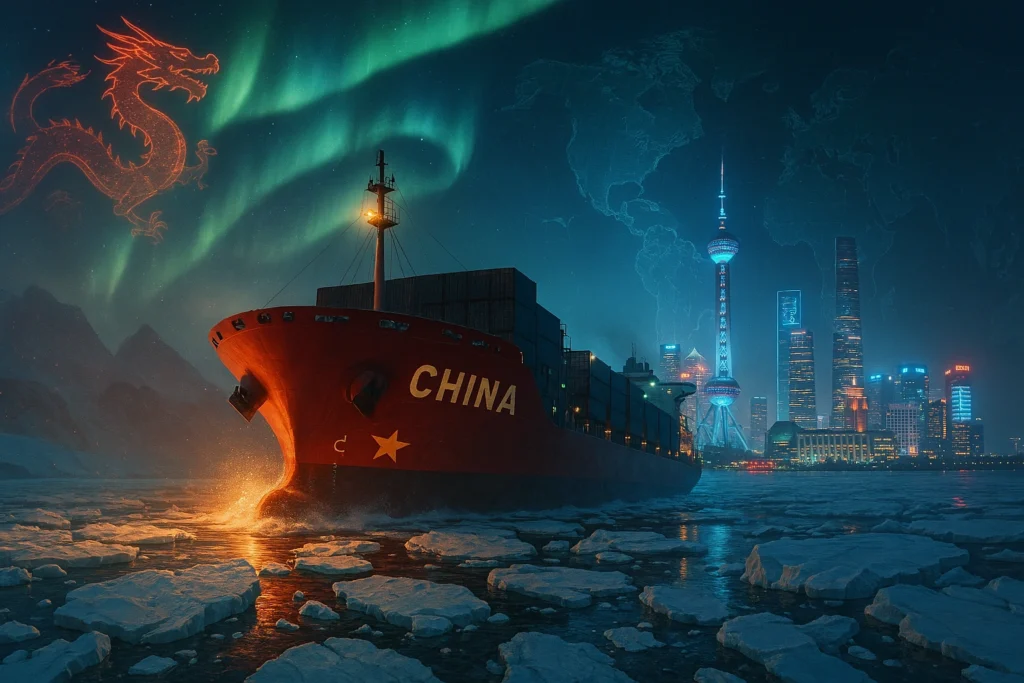
Recent BRI expansions into Central Asia and East Africa — accelerated in 2025 despite US tariff pressures and allied skepticism — have deepened this infrastructure-based soft power. New rail corridors connecting Laos to southern China, port developments in Pakistan’s Gwadar, and digital infrastructure investments in Indonesia all embed China’s influence not through force but through functional dependency. Coercion costs; connectivity compounds.
Japan’s Strategic Duality: Hard Power Rising, Soft Power Enduring
If China’s soft power ascent is the region’s headline story, Japan’s strategic evolution is its most nuanced subplot. Per ISEAS-Yusof Ishak Institute analysis published in early 2026, Japan’s hard power profile has risen markedly following successive defense budget expansions that pushed military spending toward 2% of GDP — a generational shift from postwar pacifism. Tokyo has deepened defense ties with Washington, Manila, and Canberra, and its Self-Defense Forces now participate in exercises with a scope and sophistication that would have been politically inconceivable a decade ago.
And yet Japan’s soft power strategy remains the region’s most refined and resilient. Consider the evidence: Japanese animation, manga, and gaming continue to command extraordinary global affection, with the “Cool Japan” brand registering stronger recognition scores in Southeast Asia than any competing cultural export from any nation, including South Korea’s formidable K-wave. The Lowy Institute Asia Power Index consistently ranks Japan first in cultural influence across ASEAN member states.
More importantly, Japan’s Official Development Assistance (ODA) — disciplined, transparency-focused, and oriented toward local capacity-building rather than debt leverage — has cultivated goodwill across Southeast and South Asia that survives every diplomatic turbulence. When Japan funds a metro system in Hanoi or a port in Colombo, the terms, transparency, and training programs attached to those investments generate a qualitatively different form of influence than either China’s BRI conditionality or the United States’ episodic engagement.
Japan’s dual trajectory — harder militarily, softer culturally and economically — represents a sophisticated hedge: deterrence for existential threats, attraction for everything else. It is, arguably, the most complete expression of Joseph Nye’s original soft power framework in contemporary Asian statecraft.
ASEAN’s Soft Power Laboratory: Mediation, Neutrality, and the Art of the Possible
ASEAN soft power examples have multiplied significantly through 2025 and 2026, and the Association’s emerging role as the region’s indispensable mediator deserves more analytical respect than it typically receives in Western commentary.
The Thailand-Cambodia border dispute — flaring periodically over overlapping territorial claims and Preah Vihear’s cultural politics — entered a new phase of managed de-escalation in late 2025, with ASEAN’s framework providing the diplomatic scaffolding. The mechanism was neither military nor purely transactional. It was a weave of cultural recognition (Thailand’s formal acknowledgment of Cambodian heritage sites within the disputed zone), infrastructure co-investment (a jointly administered border economic zone), and regional peer pressure from ASEAN partners who made plain that escalation threatened the entire bloc’s investment credibility.
This is how soft power resolves Asian conflicts: not through the dramatic intervention of a hegemon, but through the patient accumulation of interdependence, reputation, and reciprocal interest. As The Diplomat has documented, ASEAN’s “soft institutionalism” — derided by realists as toothless — has consistently outperformed direct coercion in managing disputes where military escalation would impose catastrophic economic costs on all parties.
The 2026 ASEAN Summit in Kuala Lumpur further formalized the bloc’s digital economy framework, binding members into shared AI governance standards, cross-border payment systems, and cybersecurity protocols. These are not the glamorous instruments of geopolitics, but they are the load-bearing architecture of soft power investments in Southeast Asia that will determine the region’s alignment for decades.
| Crisis/Dispute | Hard Power Outcome | Soft Power Outcome |
|---|---|---|
| South China Sea (ongoing) | Escalating naval standoffs; no resolution | Trade and fishing agreements quietly stabilize some bilateral relations |
| Thailand-Cambodia border | Military posturing in 2008 failed to resolve | 2025 ASEAN-mediated framework achieves phased de-escalation |
| India-Maldives tensions | Military pressure counterproductive | Diplomatic reset via development financing and cultural diplomacy |
| US-China tech rivalry | Decoupling disrupts regional supply chains | ASEAN neutrality earns investment from both sides |
India’s Moral Moment: Soft Power Through Strategic Autonomy
India occupies a singular position in the future of Asian geopolitics and soft power. Under Prime Minister Modi’s “Vishwabandhu” (Friend of the World) framing, New Delhi has positioned itself as the voice of the Global South — a claim that carries genuine weight given India’s G20 presidency legacy, its vaccine diplomacy during COVID, and its refusal to join Western sanctions regimes against Russia while simultaneously deepening ties with Washington.
This strategic ambiguity is, paradoxically, the source of India’s soft power. Nations across Africa, the Middle East, and Southeast Asia read India’s autonomous positioning not as fence-sitting but as proof that an emerging power can succeed without subordinating its sovereignty to any great power bloc. The Brookings Institution’s soft power research identifies India’s “civilizational” soft power — yoga, Bollywood, the Sanskrit-to-Silicon-Valley diaspora narrative — as the fastest-growing national brand in the developing world.
The economic impact of soft power in Asia is quantifiable here: Indian IT services exports, underpinned by a diaspora that controls strategic nodes in global technology, finance, and academia, generate influence that no aircraft carrier can replicate. India’s digital public infrastructure — UPI payment systems, Aadhaar identity frameworks — is now being exported as a development model to nations from Africa to Southeast Asia, creating a new avenue of structural influence.
The United States’ Eroding Position and the Soft Power Vacuum
Washington’s declining soft power scores in the Brand Finance 2026 index reflect a decade of self-inflicted wounds: the unilateral withdrawal from multilateral institutions, episodic foreign aid cuts, and the perception — deeply entrenched across ASEAN capitals — that US engagement in the Asia-Pacific is governed by electoral cycles rather than strategic consistency.
The US-China competition in Asia-Pacific aid has intensified, with Washington’s Blue Dot Network and Quad infrastructure initiatives attempting to counter BRI’s footprint. But competing with Chinese infrastructure financing while simultaneously pressuring allies to choose sides has produced a schizophrenic signal: the US promises partnership while demanding loyalty tests that most Asian nations, valuing their soft power neutrality, are constitutionally disinclined to accept.
Foreign Affairs has argued that Washington’s most effective tool in Asia is not military presence — already assumed and priced in — but the credibility of its economic offer. That credibility has been undermined by trade policy volatility and the perception that America’s Asia strategy is reactive to China rather than rooted in a coherent vision of regional order.
The irony is acute: the United States invented modern soft power theory, and it is now ceding the practice to the very rivals that concept was meant to help it outcompete.
The Quiet Revolution: How Soft Power Resolves Asian Conflicts
Hard power’s allure fades in an interdependent Asia where coercion costs more than it gains. This is not wishful idealism — it is the cold arithmetic of economic integration. ASEAN’s combined GDP now exceeds $3.6 trillion. China and ASEAN trade topped $900 billion in 2024. Japan’s investment in the region exceeds $400 billion in accumulated stock. In this environment, military adventurism imposes sanctions not from Washington but from markets.
The nations navigating this environment most effectively share a common strategic grammar: they invest in cultural exports, maintain developmental credibility, practice diplomatic multilateralism, and resist the temptation to reduce their influence to coercive instruments that their neighbors can neither forgive nor forget.
Soft power investments in Southeast Asia — Chinese broadband in Cambodia, Japanese bullet-train technology in India, South Korean entertainment franchises across the continent, Indian digital payment exports to Southeast Asia — are not charity. They are the architecture of the next regional order, built not with missiles but with mutual dependency.
Conclusion: The Long Game Asia Is Already Playing
The old paradigm — that Asian geopolitics would be determined by which great power could project the most lethal force over the longest distance — is giving way to a more sophisticated and, ultimately, more stable competition. The new contest is for minds, markets, and mutual trust.
China’s climb to second in the Global Soft Power Index 2026 is not the triumphalism Beijing’s state media portrays, nor the threat that Washington’s hawks fear. It is a data point in a longer arc: the maturation of Asian statecraft away from the logic of empire and toward the logic of interdependence.
Japan understands this. ASEAN has institutionalized it. India is positioning for it. Even China, for all its hard-power assertiveness in the South China Sea, is investing more in Confucius Institutes, streaming platforms, and BRI connectivity than in carrier battle groups.
The future of Asian geopolitics will not be written by the nation with the largest military. It will be written by the nation — or bloc — that best answers the question every middle power in the region is silently asking: Who do you want us to become?
The answer to that question is the real definition of soft power. And Asia, for all its complexity, is listening very carefully.
Sources: Brand Finance Global Soft Power Index 2026, Lowy Institute Asia Power Index, Council on Foreign Relations: Soft Power, Foreign Affairs: US-China Rivalry, The Diplomat: Southeast Asia Geopolitics, Brookings Institution: Soft Power Studies, East Asia Forum, ISEAS-Yusof Ishak Institute, Stratfor Geopolitical Analysis, The Economist: Asian Economic Interdependence