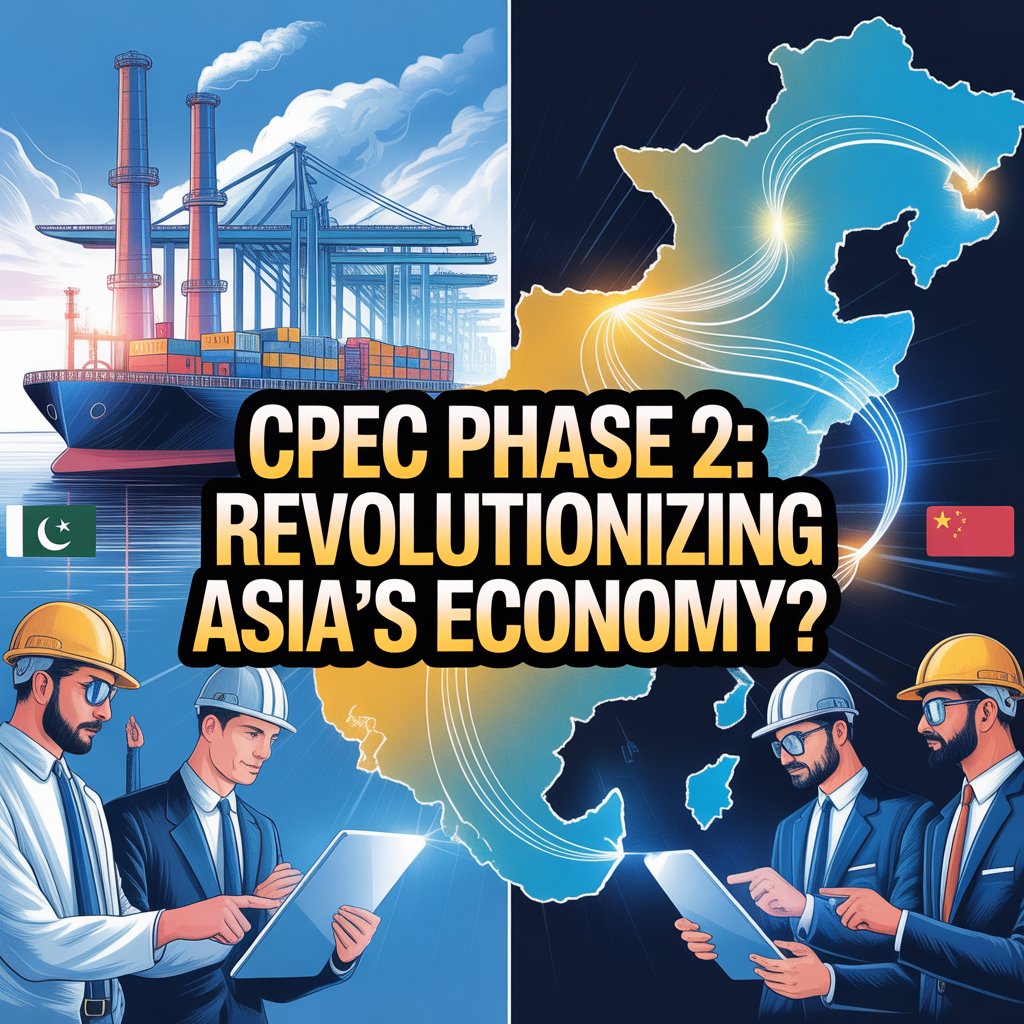
The China-Pakistan Economic Corridor (CPEC) has entered a transformative second phase, shifting its strategic focus from infrastructure development to industrial cooperation and export-led growth. As 2026 unfolds—marking the 75th anniversary of China-Pakistan diplomatic relations—CPEC Phase 2 updates 2026 reveal a dramatic expansion that could reshape South Asian geopolitics. The corridor, originally valued at $46 billion, has grown to over $65 billion in commitments, with Special Economic Zones (SEZs) surging from a modest seven to an impressive 44 approved zones.
This evolution represents more than numerical growth—it signals Pakistan industrialization under CPEC transitioning from an import-dependent economy to a regional manufacturing hub. With China contributing $188.6 million in foreign direct investment in Q1 FY2026 alone—over one-third of Pakistan’s total FDI—the momentum behind CPEC 2.0 is unmistakable. Yet this industrial renaissance carries profound implications not just for Pakistan, but for neighboring powers like India, Afghanistan, Iran, and Central Asian republics grappling with shifting economic corridors and strategic alignments.
The Evolution of CPEC: From Infrastructure to Industrial Powerhouse
CPEC Phase 1 (2015-2024) delivered what once seemed impossible: ending Pakistan’s crippling energy crisis. According to China Daily, 17 major energy projects added 8,904 megawatts of generating capacity through $18 billion in investment, supported by two coal mines and Pakistan’s first 660 kV HVDC transmission line. These projects ended power shortages that had darkened homes and shuttered industries, while 510 kilometers of new highways and 886 kilometers of transmission lines revolutionized connectivity.
But Phase 2 represents a fundamental strategic pivot. As detailed by Dawn, the Board of Investment’s Project Management Unit for CPEC Industrial Cooperation Development (PMU CPEC-ICDP) has orchestrated a dramatic expansion since its 2019 inception. The Long-Term Plan for CPEC Industrial Cooperation now emphasizes industry-led growth, export-oriented manufacturing, technology transfer, and value addition—with SEZs serving as anchor platforms.
This transformation aligns with Pakistan’s “Uraan Pakistan” 5Es Framework (Exports, E-Pakistan, Energy/Environment, Equity, and Empowerment), creating synergies between national development priorities and bilateral cooperation. The framework targets Pakistan becoming an upper-middle-income country by 2035, with per capita income rising from $1,663 to $1,824 in the last fiscal year alongside 3.04% GDP growth.
What Changed: From Government-to-Government to Business-to-Business
The shift from government-led infrastructure projects to private sector-driven industrial cooperation marks Phase 2’s defining characteristic. Business-to-business (B2B) partnerships now drive China Pakistan economic corridor Phase 2 momentum. Memoranda of Understanding worth $8.5 billion were signed during September 2025 business engagements, demonstrating robust investor appetite for Pakistani manufacturing ventures.
Chinese companies are establishing major industrial parks that will reshape Pakistan’s export profile. Haier’s $400 million home-appliance industrial park will produce 10 million units annually, while Challenge Group’s $150 million textile park expects to generate $400 million in yearly exports. These anchor investments signal confidence in Pakistan’s emergence as a competitive manufacturing destination at the crossroads of South Asia, Central Asia, and the Middle East.
SEZs as Engines of Growth: The 44-Zone Revolution
The explosion of CPEC special economic zones from 7 to 44 represents one of Phase 2’s most tangible achievements. These zones—spanning from Rashakai in Khyber Pakhtunkhwa to Dhabeji in Sindh, from Allama Iqbal Industrial City in Punjab to Bostan in Balochistan—offer comprehensive incentives including tax relief, customs exemptions, and modern infrastructure designed to attract both domestic and foreign investment.
Four SEZs have reached advanced development stages. According to Modern Diplomacy, Dhabeji SEZ in Sindh, Bostan SEZ in Balochistan, Rashakai SEZ in KP, and Allama Iqbal Industrial City in Punjab are attracting investment across automobiles, electronics, textiles, and consumer goods. Additional zones in Gilgit-Baltistan (Moqpondass SEZ), Azad Jammu & Kashmir (Mirpur SEZ), and former FATA (Mohmand Marble City) are at feasibility stages, alongside federal zones including an Industrial Park on Pakistan Steel Mill land and an ICT Model Industrial Zone.
How CPEC Phase 2 Boosts Pakistan Exports and Jobs
The SEZs in Pakistan benefits extend far beyond physical infrastructure. These industrial clusters are projected to create approximately 2.2 million jobs by 2030, directly addressing Pakistan’s unemployment challenges while building industrial capacity and enhancing export capabilities. The relocation of Chinese industries to these zones facilitates crucial technology and skills transfer, boosting productivity while helping curb Pakistan’s persistent trade imbalance.
Pakistan stands uniquely positioned to capture a portion of the estimated 85 million manufacturing jobs currently relocating from China due to rising costs. By integrating into global supply chains, SEZs enable exports ranging from textiles and pharmaceuticals to agro-processed goods and engineering products. Key industrial clusters near Faisalabad reached approximately 73% occupancy by late 2025, reflecting strong investor confidence and demonstrating that how CPEC Phase 2 boosts Pakistan exports and jobs through tangible economic transformation.
Agricultural modernization represents another crucial pillar. Pakistan has begun exporting red chillies, sesame, beef, and animal skins to China, marking the rise of agri-exports under CPEC. Collaboration with China’s Xinjiang Uygur Autonomous Region—where agricultural technology is highly developed—offers promise for introducing advanced technologies, improving research capabilities, and applying modern farming practices. This cooperation aims to increase yields, reduce post-harvest losses, and improve farmer incomes while opening new export markets for rural communities.
Regional Ripples: Opportunities and Challenges for Neighbors
The CPEC impact on regional economy extends far beyond Pakistan’s borders, creating complex dynamics for neighboring states. Each regional player faces distinct opportunities and challenges as CPEC 2.0 reshapes trade flows, connectivity networks, and strategic calculations across South and Central Asia.
India’s Strategic Dilemma: Sovereignty Versus Connectivity
India’s opposition to CPEC remains unwavering, rooted in fundamental sovereignty concerns. The corridor passes through Pakistan-administered Kashmir—territory India claims as illegally occupied. As CPEC Phase 2 effects on India and Afghanistan intensify, New Delhi perceives multiple strategic threats: encirclement through China’s “String of Pearls” strategy, diminished regional influence, and challenges to projects like Chabahar Port in Iran.
The May 2025 trilateral agreement extending CPEC into Afghanistan particularly alarmed Indian policymakers. This expansion involves connecting Pakistani infrastructure to Afghan roads, railways, and mineral-rich provinces, potentially linking the entire region to China’s Belt and Road Initiative while bypassing Indian trade routes. India has invested over $3 billion in Afghanistan development—including the Zaranj-Delaram highway, Parliament building, and numerous infrastructure projects. China’s expanded role through CPEC threatens to displace India’s development leadership and diminish New Delhi’s influence in a country where it has maintained significant presence.
Beyond sovereignty and influence concerns, India worries about strategic encirclement. A well-connected Gilgit-Baltistan attracting industrial development could consolidate international perception of the region as Pakistani territory, undermining India’s territorial claims. Meanwhile, Gwadar Port’s development as a logistics hub—complemented by Chinese presence at Hambantota (Sri Lanka) and Chittagong (Bangladesh)—deepens India’s strategic vulnerabilities on both maritime flanks.
India’s response strategy centers on developing alternative connectivity initiatives. The Chabahar Port project offers India strategic positioning and direct trade routes to Afghanistan and Central Asia, bypassing Pakistan. The International North-South Transport Corridor (INSTC), established with Russia and Iran, aims to reduce transport costs compared to traditional Suez Canal routes. The Quadrilateral Security Dialogue (QUAD) with the US, Japan, and Australia provides frameworks like the Blue Dot Network and Build Back Better World initiative as alternatives to Belt and Road projects.
Afghanistan and Central Asia: Gateway or Dependency?
For Afghanistan, CPEC extension presents potential economic lifelines alongside sovereignty concerns. The Taliban-led government, facing economic difficulties after foreign aid withdrawal, sees infrastructure investment as crucial. The corridor could harness Afghanistan’s vast untapped natural resources—including 1.4 million tonnes of rare earth minerals, plus copper, gold, uranium, and lithium critical for advanced technologies and military applications.
Connectivity improvements promise tangible benefits. The proposed Peshawar-Kabul motorway extension would link Afghanistan to Pakistani rail and road systems, opening new trade corridors to the Arabian Sea. Energy pipelines through Afghan territory could connect Iran and Central Asia to broader regional networks. For a landlocked nation, these infrastructure developments offer unprecedented access to global markets.
Yet critics warn of potential dependency. Afghanistan risks becoming a resource extraction corridor rather than an industrial partner, with limited value addition occurring domestically. The infrastructure projects could prioritize Chinese and Pakistani interests over Afghan sovereignty and equitable benefit-sharing. Security concerns persist, with fears that logistics networks might serve dual military-civilian purposes, raising questions about long-term strategic implications.
Central Asian republics—Uzbekistan, Kazakhstan, Tajikistan, Turkmenistan, and Kyrgyzstan—view CPEC with cautious interest. The corridor offers shorter routes to warm-water ports, potentially reducing reliance on Russian transit networks. However, these nations must balance economic opportunities against concerns about Chinese dominance in regional trade networks and infrastructure dependencies.
Iran’s Gwadar Challenge: Competing Ports and Cooperation
Gwadar Port’s transformation into a regional maritime hub creates both competition and potential cooperation with Iran’s Chabahar Port. Gwadar now features the East Bay Expressway, a new international airport (operational in 2025), and ongoing port modernization projects. The Gwadar Shipyard Mega Project creates employment while positioning Pakistan competitively in regional maritime markets, with complementary investments in fisheries, aquaculture, and seafood processing strengthening exports to Gulf, African, and Southeast Asian markets.
For Iran, Gwadar represents direct competition for transit fees and regional trade dominance. Yet cooperation possibilities exist—proposed pipelines connecting Iranian energy resources through Pakistan to China could create mutual benefits. The delicate balance between competition and cooperation will significantly shape regional economic geography in coming years.
Real-Time Progress and Data Insights: Where CPEC Stands in 2026
As of February 2026, CPEC has achieved significant milestones while facing acknowledged challenges. Cumulative direct investment reached $25.93 billion across 38 completed projects, with 23 additional projects worth $2.1 billion currently under implementation. The corridor has created 261,000 jobs, improving countless family livelihoods while building solid public support foundations.
However, investment momentum has moderated from peak levels. Chinese FDI inflows contracted from multi-billion-dollar annual increases during CPEC’s initial construction surge (2015-2018) to well under $1 billion by FY2022-23, though China remains Pakistan’s largest single-country investor. This reflects more cautious and selective investment posturing by Beijing, with profit repatriation and debt servicing related to earlier projects offsetting portions of new inflows.
Phase 2’s success hinges on several critical factors:
• Policy Continuity: Regulatory stability and transparent governance remain essential for sustained investor confidence. Pakistan’s business environment improvements—positioning it as potentially the most investor-friendly in South Asia—must be maintained through political transitions.
• Security Assurances: Protection of Chinese nationals and CPEC infrastructure from attacks by groups like Baloch Liberation Army (BLA) and Tehrik-e-Taliban Pakistan (TTP) remains paramount. Pakistan deployed 10,000 troops initially for CPEC protection, increasing to 15,000 by 2016, but sustained security requires both military presence and addressing local grievances.
• Local Community Integration: Critics argue that CPEC prioritizes foreign personnel protection over addressing local communities’ grievances, including displacement, environmental degradation, and insufficient local employment. Balochistan’s historical marginalization requires careful attention to ensure inclusive development.
• Debt Sustainability: Concerns about debt-trap dynamics persist, though official figures show relatively modest CPEC-related debt proportions in Pakistan’s total national debt. Transparency in financial arrangements and realistic assessments of project returns remain crucial for long-term sustainability.
Notable infrastructure progress includes the $6.8 billion ML-1 railway modernization upgrade, which will revolutionize Pakistan’s railway system by reducing travel time and transportation logistics costs. This project will enhance goods movement within Pakistan, improve regional trade reliability, and shift significant freight traffic from roads to railways, relieving road congestion.
Looking Ahead: Sustainable Pathways and Strategic Choices
The trajectory of sustainable growth in CPEC industrialization depends on balancing economic imperatives with environmental stewardship and social equity. Phase 2’s emphasis on “green development” and environmentally sustainable technologies across chemicals, pharmaceuticals, and manufacturing represents progress, though implementation challenges remain significant.
The Industrial Cooperation Action Plan (2025-2029) provides roadmaps for relocating Chinese manufacturing to Pakistan while promoting high-quality technologies. Dedicated joint working groups on science, technology, and information technology drive collaboration in artificial intelligence, e-commerce, and digital connectivity. Investments in fiber-optic networks, digital skills training, and e-governance build foundations for a knowledge-based economy, ensuring Pakistan’s youth can compete globally in future industries.
Human development initiatives complement industrial growth. Poverty alleviation schemes, healthcare expansion, education programs, and women employment initiatives aim to ensure CPEC benefits reach ordinary Pakistanis. Vocational training facilities at Gwadar Port, for instance, equip locals with skills required for port operations. This emphasis on human capital ensures growth is not only economic but socially equitable.
Regional cooperation frameworks offer promising pathways forward. The five corridors of CPEC Phase 2—growth, innovation, green development, livelihood improvement, and regional connectivity—provide comprehensive blueprints. Afghanistan’s potential integration, despite security and sovereignty challenges, could unlock landlocked Central Asian markets. Iran-Pakistan energy cooperation could reduce both nations’ isolation while diversifying energy sources.
The Path Forward: Balancing Ambition with Pragmatism
CPEC’s ultimate success requires navigating multiple paradoxes. Pakistan must attract foreign investment while developing domestic capabilities. It must integrate into Chinese-led supply chains while maintaining economic sovereignty. It must balance rapid industrialization with environmental sustainability. Regional connectivity must expand without exacerbating geopolitical tensions.
For regional players, strategic choices loom large. India must decide whether steadfast opposition serves long-term interests better than selective engagement in regional connectivity frameworks. Afghanistan must balance resource development against sovereignty protection. Iran must choose between viewing Gwadar as competitor or potential partner. Central Asian states must weigh Chinese-led connectivity against maintaining strategic autonomy.
The 75th anniversary of China-Pakistan diplomatic relations in 2026 provides symbolic momentum for Phase 2 acceleration. Commemorative and investment-focused initiatives planned by PMU CPEC-ICDP aim to deepen bilateral industrial cooperation. Yet symbols alone cannot overcome structural challenges: financing gaps, security threats, political instability, and regional tensions all threaten sustained progress.
Conclusion: CPEC 2.0 at the Crossroads of Ambition and Reality
CPEC Phase 2 represents more than bilateral infrastructure investment—it constitutes a blueprint for Pakistan’s industrial and maritime transformation with profound regional implications. The surge from 7 to 44 SEZs, major industrial parks producing for global markets, agricultural modernization initiatives, and Gwadar’s emergence as a logistics hub collectively signal Pakistan’s ambition to become a regional economic powerhouse.
Yet CPEC Phase 2 regional implications extend beyond economic metrics. For India, the corridor represents territorial violations and strategic encirclement requiring robust countermeasures. For Afghanistan, it offers economic opportunities shadowed by dependency risks. For Iran and Central Asian states, it creates complex calculations balancing connectivity benefits against Chinese influence concerns.
The path ahead requires balancing competing imperatives: economic growth with sustainability, foreign investment with domestic capability building, regional integration with sovereignty protection, rapid industrialization with social equity. Success depends not on China-Pakistan cooperation alone, but on creating inclusive frameworks that address neighboring states’ legitimate concerns while delivering tangible benefits for ordinary citizens.
As 2026 unfolds, CPEC stands at a critical juncture. The next five years will determine whether Phase 2 delivers on promises of transforming Pakistan into an export-led manufacturing hub creating millions of jobs, or whether structural challenges—debt sustainability, security threats, political instability, regional tensions—constrain ambitions. For Pakistan and its neighbors, the stakes extend beyond economic statistics to fundamental questions about regional order, connectivity patterns, and strategic alignments shaping South and Central Asia’s 21st-century trajectory.
The verdict on CPEC 2.0 will be written not in Beijing or Islamabad alone, but across the broader region where competing visions of connectivity, development, and strategic autonomy converge. For now, cautious optimism tempered by realistic assessment of challenges seems the wisest posture—acknowledging genuine progress while remaining alert to pitfalls that could derail this ambitious endeavor reshaping one of the world’s most strategically consequential regions.