In an era of unprecedented disruption, Donald Trump’s return to the White House has transformed U.S. foreign policy from benevolent leadership to raw power politics—with profound consequences for America and the world
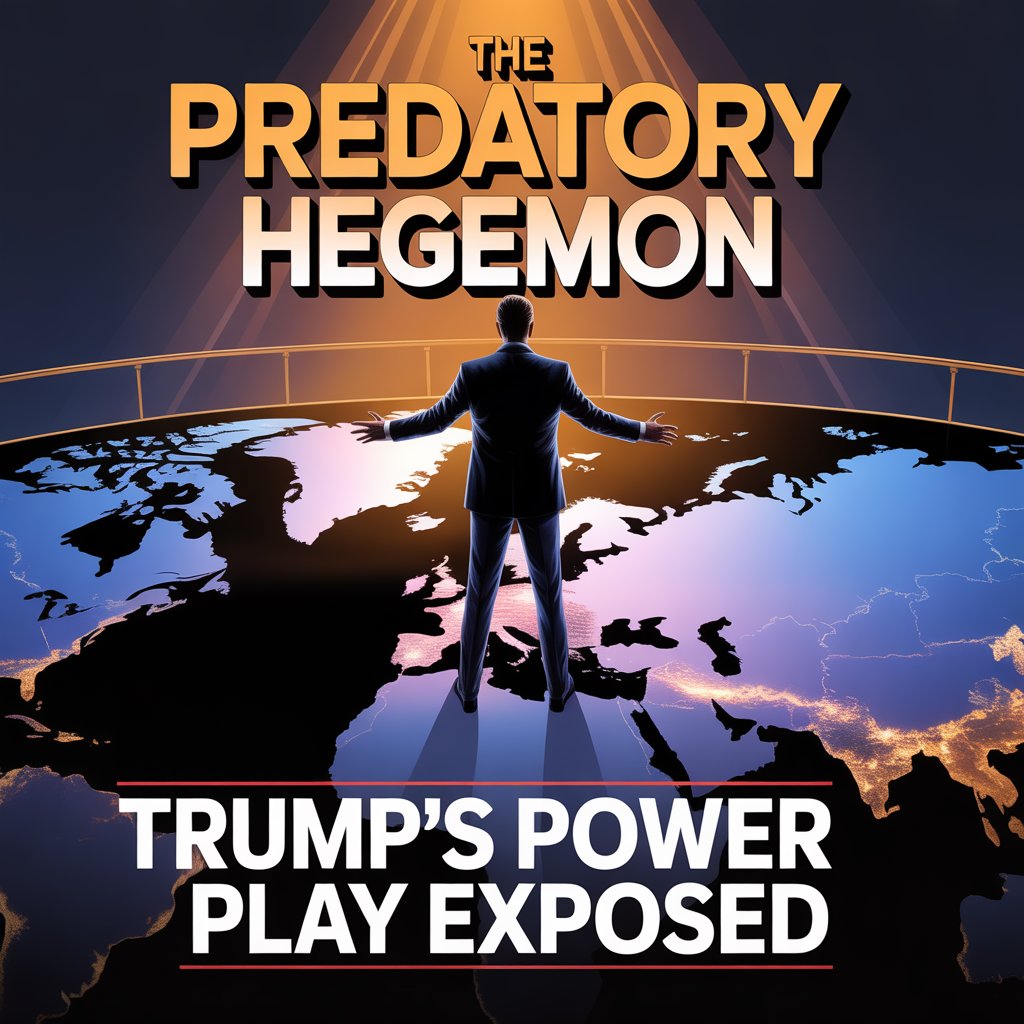
When President Donald Trump authorized a midnight military operation to capture Venezuelan President Nicolás Maduro in early January 2026, bringing him to New York to face trial, the world witnessed something extraordinary: an American president willing to kidnap a sitting head of state. This audacious move—unprecedented since George H.W. Bush’s 1989 operation against Panama’s Manuel Noriega—crystallized what foreign policy analysts are calling Trump’s “predatory hegemony”: the systematic exploitation of American power for short-term gains, regardless of long-term consequences or established norms.
One year into Trump’s second term, the evidence is overwhelming. From threatening to seize Greenland with military force to wielding tariffs as diplomatic weapons against NATO allies, from gutting U.S. foreign aid by nearly 70% to withdrawing from 66 international organizations, the Trump administration has fundamentally rewritten the rules of American global engagement. As reported by Foreign Affairs, this approach represents “a predatory impulse” that “extends to matters of culture,” with the administration’s National Security Strategy even declaring that Europe faces “civilizational erasure.”
The question facing policymakers, business leaders, and citizens worldwide is no longer whether Trump’s approach differs from his predecessors—it’s whether predatory hegemony can sustain American power or whether it contains, as scholars warn, “the seeds of its own destruction.”
From Benevolent Leader to Predatory Power: The Transformation of U.S. Foreign Policy
For seven decades following World War II, American hegemony operated on a distinctive principle: the United States would bear disproportionate costs to maintain a liberal international order because doing so served its long-term interests. Washington provided security guarantees, championed free trade, and built multilateral institutions—not out of altruism, but because these investments generated outsized returns in influence, prosperity, and security.
Trump’s second administration has abandoned this framework entirely. According to Brookings Institution analysis, the 2025 National Security Strategy “makes crystal clear how the White House views the world”: mass migration is deemed the primary external threat to America—more than China, Russia, or terrorism—and the Western Hemisphere, not traditional theaters like Europe or the Indo-Pacific, receives top priority.
The shift is more than rhetorical. As Time Magazine documented, world leaders now treat “management of Trump’s emotions as a strategic priority.” NATO’s Secretary-General reportedly referred to Trump as “daddy.” Switzerland presented him with a gold bar. Qatar gifted him a $400 million plane, raising massive ethical concerns. These displays of sycophancy reveal a fundamental transformation: American power has become transactional, “not a public good but an asset to be traded.”
The Mechanics of Predatory Hegemony
Trump’s approach operates through several interconnected mechanisms:
Weaponized Tariffs: The administration has deployed tariffs with unprecedented aggression. In January 2026, Trump threatened eight European NATO allies—Denmark, France, Germany, the Netherlands, Norway, Sweden, the United Kingdom, and Finland—with escalating tariffs starting at 10% and rising to 25% unless they supported U.S. acquisition of Greenland. According to CNBC, these levies were designed to stack atop existing 15% tariffs on EU goods, potentially devastating transatlantic trade worth $1.7 trillion annually.
Following Trump’s April 2025 “Liberation Day” tariff announcement, Goldman Sachs economists found that U.S. importers bore 64% of the tariff burden three months later—contradicting Trump’s claims that foreign exporters would pay. The impact extends globally: Trump raised tariffs on Brazil to 50% to punish its prosecution of former President Jair Bolsonaro, and imposed punitive levies on India for purchasing Russian oil.
Military Coercion and Territorial Ambitions: The Venezuela operation exemplified Trump’s willingness to use military force unilaterally. The Chicago Council on Global Affairs noted that Trump’s “first foreign policy moves of the new year included invading Venezuela, threatening to coerce Greenland into becoming a US territory, and withdrawing the US from 66 international organizations.”
Trump has repeatedly expressed desires to annex Canada (suggesting it become the 51st state), retake the Panama Canal, and forcibly acquire Greenland—assertions that Danish military intelligence warned demonstrate how “the United States uses economic power, including threats of high tariffs, to enforce its will, and no longer rules out the use of military force, even against allies.”
Dismantling Multilateral Architecture: The administration shuttered USAID, withdrew from the World Health Organization and Paris Climate Accords, and eliminated nearly 45% of the State Department’s domestic offices. According to Council on Foreign Relations data, U.S. foreign aid plummeted from $63.3 billion in 2024 to as low as $8.1 billion in 2026 (including rescissions and cancellations)—a staggering 87% reduction. OECD projections suggest this contributed to over 350,000 deaths and the first rise in child mortality this century.
Transactional Alliance Management: European defense spending reached historic highs under Trump’s pressure—all NATO allies now meet the 2% GDP defense spending threshold for the first time. Yet this success came at enormous cost to alliance cohesion. As Washington Post analysis observed, Trump is “replacing U.S. leadership with fear” rather than cultivating genuine partnerships.
The 2026 National Defense Strategy: Spheres of Influence Return
The Trump administration’s January 2026 National Defense Strategy represents perhaps the clearest articulation of predatory hegemony’s logic. According to the Council on Foreign Relations, the document’s thesis is “three-pronged: the United States must rationalize its global military posture amid acute resource constraints; a larger share of remaining resources must be directed toward homeland defense and hemispheric dominance; and allies and partners elsewhere, particularly in Europe and the Indo-Pacific, will be expected to shoulder greater responsibility for their collective security.”
Most strikingly, China is no longer explicitly identified as the principal threat, and the Indo-Pacific is not cited as America’s most critical theater. Instead, the strategy calls for “resolute denial defense along the First Island Chain”—but makes clear that Japan, the Philippines, South Korea, and Taiwan must make “massive investments in their own defense enterprises” because Washington will not continue its outsize role.
This represents a fundamental departure from post-World War II American strategy. Foreign policy analysts noted that while “earlier U.S. administrations mainly invaded and occupied ‘others’; they refrained from openly threatening territorial grabs against Western allies.” Trump’s simultaneous territorial ambitions toward allied territory (Greenland) and military operations in the hemisphere (Venezuela) signal a revival of 19th-century great power politics.
The strategy document explicitly calls to “reassert and enforce the Monroe Doctrine to restore American pre-eminence in the Western Hemisphere”—what Trump himself dubbed the “Donroe Doctrine.” Several pages depict Europe as suffering “civilizational erasure” and pledge that U.S. policy will cultivate “resistance” to Europe’s mainstream governments.
Real-World Consequences: The Greenland Crisis
The Greenland dispute provides a microcosm of predatory hegemony in action—and its limitations. In mid-January 2026, Trump announced 10% tariffs on eight European nations, escalating to 25% by June, unless Denmark agreed to sell Greenland to the United States. European leaders responded with unprecedented unity, issuing a joint statement declaring the threats “undermine transatlantic relations and risk a dangerous downward spiral.”
French President Emmanuel Macron called the tariffs “unacceptable.” British Prime Minister Keir Starmer stated bluntly: “Applying tariffs on allies for pursuing the collective security of NATO allies is completely wrong.” The European Union halted final approval of a critical trade deal and prepared retaliatory measures worth billions.
Within days, Trump backtracked. Following a meeting with NATO Secretary-General Mark Rutte at the World Economic Forum in Davos, Trump announced a “framework of a future deal” regarding Greenland and suspended the threatened tariffs. Details remained vague—Trump described it as “pretty much the concept of a deal” that would last “forever”—but the episode revealed crucial dynamics.
First, even at the height of American power, predatory tactics provoke unified resistance from allies. Second, Trump’s approach generated enormous volatility: stocks plummeted when tariffs were announced and soared upon their suspension. Third, the “framework” appeared to involve increased NATO security commitments in the Arctic rather than any territorial transfer—suggesting that Trump’s maximalist demands may yield more modest outcomes when tested.
Yet the damage persists. European Parliament members noted that while immediate tariff threats were “on hold,” countermeasures remain “not off the table,” and European leaders demanded “greater clarity” on Trump’s true intentions. Trust, once fractured, proves difficult to restore.
The Economic Dimension: Trade Wars and Their Discontents
Trump’s tariff strategy extends far beyond Greenland. The administration has launched trade wars with Canada, Mexico, and China while threatening virtually every major trading partner. According to CFR analysis, major questions loom over whether the Supreme Court will strike down Trump’s “reciprocal tariffs,” whether affordability concerns will force mass exemptions, and who ultimately pays these levies.
The evidence increasingly suggests American consumers and businesses bear the primary burden. Beyond direct costs, the tariffs have thrown international trade into disarray. Many violate core WTO obligations, including bound tariff rates and non-discrimination principles. China US Focus research noted these tariffs “hit mid- and low-income countries harder, affecting a large portion of the world’s population.”
The administration’s justification—that tariffs will force better trade deals and onshore manufacturing—faces skepticism. Apart from data centers fueled by artificial intelligence mania, Foreign Affairs reports that “new foreign investment in the United States falls well short of trillions of dollars and is unlikely to fully materialize.” Meanwhile, Trump’s claim to have ended “decades-long wars” rings hollow: most conflicts he declares “solved” remain active or merely paused.
Key Takeaways
- Trump’s “predatory hegemony” marks a fundamental shift from post-WWII benevolent leadership to raw transactional power politics
- Weaponized tariffs target allies and adversaries alike, with threatened levies on eight NATO members over Greenland exceeding 25%
- Military operations like the Venezuela raid and territorial ambitions toward Greenland and the Panama Canal revive 19th-century imperialism
- U.S. foreign aid collapsed by up to 87%, contributing to 350,000+ deaths and rising child mortality globally
- Alliance cohesion frays despite increased European defense spending, as partners hedge against American unpredictability
- China and Russia emerge emboldened, viewing Trump’s approach as creating opportunities for regional expansion
- Long-term costs of predatory hegemony likely exceed short-term gains, risking “gradual then sudden” decline in American influence
Geopolitical Implications: The Rise of Hedging Strategies
Perhaps the most profound consequence of predatory hegemony is the strategic uncertainty it generates among both allies and adversaries. Atlantic Council analysis warns that Trump has “strengthened and weakened US alliances simultaneously,” prompting allies to increase defense spending while simultaneously “hedging against US unpredictability.”
China and Russia have emerged from 2025 more confident. Moscow believes it can expand its sphere of influence by reversing post-Cold War losses, starting with Ukraine. Beijing aims to gain greater control over its region with emphasis on Taiwan while bidding for global leadership. The Trump administration’s accommodating stance toward Russia—offering concessions on Ukraine while insisting Kyiv bears partial responsibility for the invasion—has emboldened revisionist powers.
Meanwhile, American soft power has collapsed. Pew Research Center studies show global confidence in U.S. leadership has plummeted, with many nations expressing low confidence in Trump’s handling of world affairs. The administration systematically dismantled organizations promoting American soft power, including defunding the U.S. Institute of Peace and eliminating the Presidential Management Fellows program—a key pipeline for recruiting foreign policy talent.
Countries are actively seeking to reduce dependence on Washington. Some make new arrangements with U.S. rivals. Others bide their time, waiting for opportunities to retaliate against perceived American selfishness. The networks of power and influence that amplified American leverage for decades are fraying—precisely the leverage Trump now seeks to exploit.
The Paradox of Power: Why Predatory Hegemony Fails
The fundamental flaw in predatory hegemony lies in its short-term focus. Trump’s approach treats accumulated American influence as a resource to be extracted rather than continuously replenished. Foreign Affairs scholars argue this strategy “squanders these advantages in pursuit of short-term gains and ignores the long-term negative consequences.”
History offers sobering precedents. During the 1930s, great powers abandoned multilateral cooperation for narrow self-interest, contributing to catastrophic conflict. The post-1945 liberal order emerged specifically to prevent such dynamics. By reverting to 19th-century power politics, Trump risks outcomes that century’s statesmen would recognize: balancing coalitions, economic fragmentation, and increased conflict probability.
The administration appears to believe it can “prey on other states forever, and that doing so will make the United States even stronger and further increase its leverage.” Yet several dynamics suggest otherwise:
Economic Backlash: As tariff costs mount and investment fails to materialize at promised levels, domestic political pressure will intensify. Inflation concerns already undermine Trump’s popularity. Foreign Policy analysis suggests that if economic stagnation continues, “that’s going to be the dominant thing going into the midterms.”
Alliance Fragmentation: While European defense spending increased, genuine commitment to U.S. priorities has weakened. Countries increasingly view American demands as threats rather than requests from a trusted partner. The willingness to make sacrifices for U.S. interests—a cornerstone of American power—erodes steadily.
Rival Empowerment: China’s near-total control over critical minerals and rare earth elements, combined with its willingness to weaponize that dominance, demonstrates how predatory behavior by one power encourages similar tactics by others. Russia’s continued aggression in Ukraine, enabled partly by Trump’s accommodating posture, illustrates how perceived American weakness invites challenges.
Institutional Decay: Gutting the State Department, eliminating USAID, and withdrawing from international organizations doesn’t just reduce American influence—it eliminates the infrastructure through which influence operates. These capabilities, once dismantled, require years to rebuild.
Looking Ahead: Can America Course-Correct?
As Trump enters his second year in office, the trajectory remains concerning. FDD’s Trump Administration Foreign Policy Tracker notes multiple contradictions: the National Security Strategy emphasizes hemispheric preeminence while adopting a “softer China frame” that “risks normalizing win-win assumptions about a coercive, illiberal rival.”
Major tests loom in 2026. U.S. intelligence analysts believe Chinese President Xi Jinping has ordered the People’s Liberation Army to build forces necessary to invade Taiwan by 2027. The Gaza ceasefire remains fragile. Ukraine’s war grinds on with no resolution. Iranian protests challenge the regime while Trump threatens intervention. The last remaining nuclear arms control treaty with Russia expires next month with no replacement in sight.
Each crisis will test whether Trump’s transactional approach can navigate complexity or whether it exacerbates instability. The Venezuela operation offers a preview: Trump captured Maduro but faces challenges establishing legitimate governance without engaging in the “nation-building” he abhors. Meanwhile, China and Russia watch closely, drawing lessons about acceptable behavior toward weaker neighbors.
For American allies and partners, the calculation has become stark. Do they invest in relationships with an increasingly unreliable Washington, or do they hedge by developing independent capabilities and alternative partnerships? European leaders openly question whether NATO can survive sustained American hostility toward alliance commitments.
For adversaries, Trump’s approach offers opportunities. If the United States prioritizes Western Hemisphere dominance while reducing commitments elsewhere, space opens for Russian and Chinese expansion in Europe and Asia respectively. If American power operates purely transactionally, rivals can outbid Washington in countries where U.S. leverage is limited.
Conclusion: The Cost of Predatory Hegemony
To quote Ernest Hemingway’s famous line about bankruptcy: American global influence under predatory hegemony risks declining “gradually and then suddenly.” The United States remains extraordinarily powerful—it will not face a vast countervailing coalition or lose its independence. But it is becoming, as Foreign Affairs warns, “poorer, less secure, and less influential than it has been for most living Americans’ lifetimes.”
Future U.S. leaders will inherit a weaker position and face “an uphill battle to restore Washington’s reputation as a self-interested but fair-minded partner.” The networks of influence, the reservoir of goodwill, the institutional architecture that amplified American power—these assets, accumulated over generations, are being rapidly depleted.
The ultimate irony of Trump’s predatory hegemony is that it may achieve the opposite of its intention. Rather than maximizing American power and prosperity, it risks accelerating American decline by alienating allies, emboldening adversaries, and squandering the unique advantages that made U.S. hegemony both possible and durable.
Hard power remains the primary currency in world politics. But the purposes for which it is used and the manner in which it is wielded determine whether it effectively advances national interests—or undermines them. In treating American power as an extractive resource rather than a generative asset, Trump may be conducting a dangerous experiment with profound consequences for America and the world.
The coming year will reveal whether this approach represents a temporary aberration or a fundamental transformation of American foreign policy. For now, the world watches with mixture of apprehension and calculation, adjusting strategies for an era when the hegemon has become predator.
Sources and Further Reading
- Foreign Affairs: The Predatory Hegemon
- Brookings Institution: Breaking Down Trump’s 2025 National Security Strategy
- Council on Foreign Relations: Iran Is a Test of Trump’s National Defense Strategy
- Time Magazine: How Trump’s Foreign Policy Gambits Are Reshaping the World
- Chicago Council on Global Affairs: Trump 2.0 Enters 2026 in Full Force
- Center for American Progress: Trump Global Weakness Watch
- CFR: Visualizing 2026: Five Foreign Policy Trends to Watch