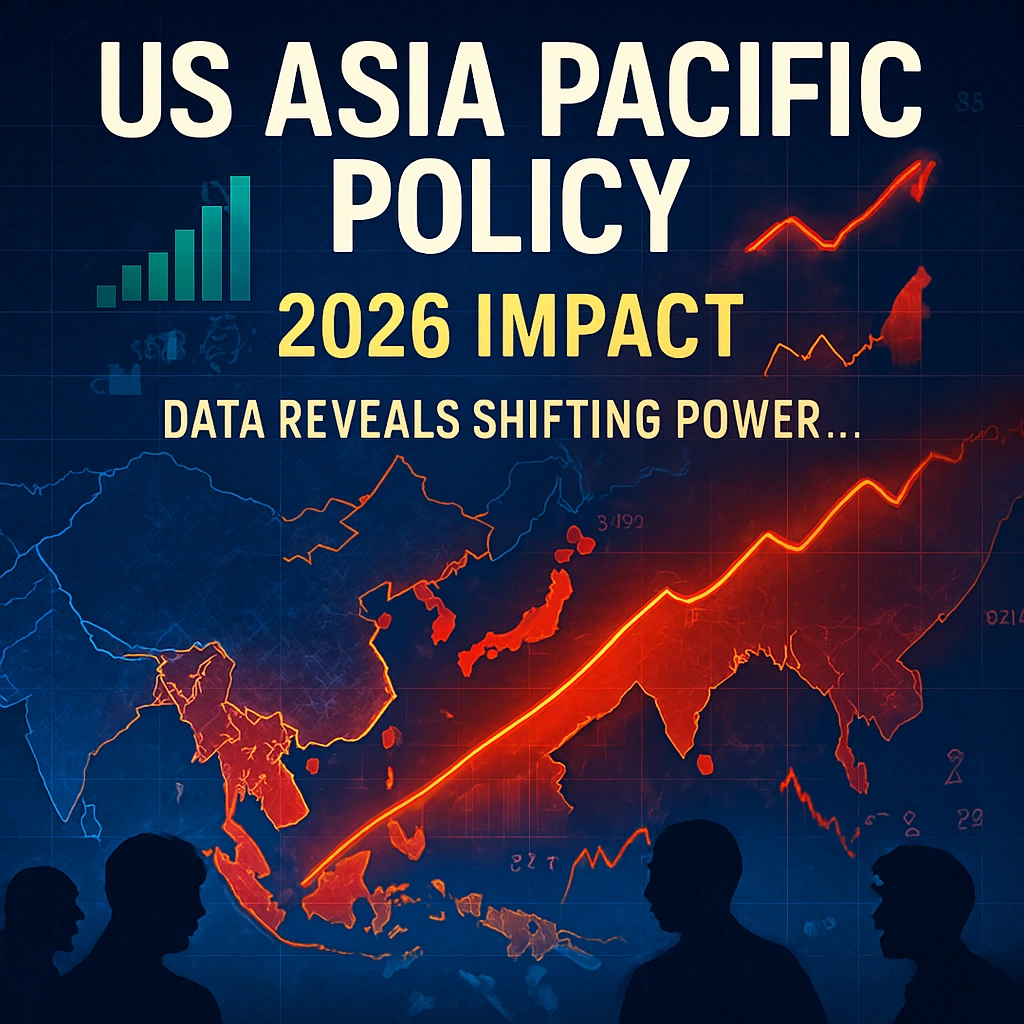
The second Trump administration’s approach to the Asia-Pacific region represents a fundamental recalibration of American foreign policy—one marked by strategic ambiguity, transactional diplomacy, and a notable pivot away from the region that has long been central to US global strategy. As 2026 unfolds, the implications of this shift are reverberating across capitals from Tokyo to Jakarta, reshaping alliance structures, economic partnerships, and the broader security architecture of the Indo-Pacific.
A Strategy Turning Inward: The 2025 National Security Framework
The 2025 US National Security Strategy places border control, domestic political conflicts and the Western Hemisphere at the centre of US policy, downgrading geopolitical competition with China in both rhetoric and practice. This represents a striking departure from the Biden administration’s sustained focus on the Indo-Pacific as the principal theater of great power competition.
The Trump administration’s NSS explicitly prioritizes what it terms “strategic consolidation”—concentrating American power in its own hemisphere while maintaining a balance of power in Asia, Europe, and the Middle East. The grand strategy can be summarized as dominating its own region while maintaining a balance of power in the three major outside regions, according to analysis from Foreign Policy. This approach reflects a belief that the United States lacks sufficient conventional forces to fight concurrent wars in multiple theaters and must therefore prioritize more judiciously.
For Asia-Pacific nations accustomed to robust American leadership, this strategic reorientation creates profound uncertainty. While the administration maintains rhetorical support for initiatives like AUKUS and continues to emphasize deterrence vis-à-vis Taiwan, actions speak louder than words—and those actions increasingly suggest an America less willing to bear the costs of regional leadership.
The Tariff Shadow: Economic Disruption and Strained Partnerships
Perhaps no aspect of Trump’s Asia policy has generated more concern than his aggressive use of tariffs. Throughout 2025, the administration imposed sweeping tariffs on Asian exports, fundamentally altering economic relationships built over decades.
The International Monetary Fund warns that growth across the Asia-Pacific will slow in 2026, in part because of U.S. policy, while Asian consumer demand will remain stagnant, too, due to uncertainty about the global economic environment. The World Trade Organization projects that global trade growth may slow to just 0.5% in 2026, with Asia-Pacific economies bearing significant impacts.
The damage extends beyond immediate economic costs. Trump has imposed arbitrary and brutal tariffs on Asia Pacific allies such as Japan and South Korea, pushing them closer to China. This creates a perverse dynamic where American pressure drives regional partners toward greater accommodation with Beijing—precisely the opposite of stated US strategic objectives.
Vietnam, Thailand, and Malaysia face particular vulnerability due to their substantial trade surpluses with the United States. Persistent trade surpluses have increased exposure, turning export success into a political vulnerability as trade balances are increasingly framed as evidence of unfairness rather than integration. For these nations, what was once considered successful economic integration now represents a liability in Washington’s transactional calculus.
Even more troubling, the administration’s approach undermines multilateral frameworks. Trump has threatened to abandon the Indo-Pacific Economic Framework, preferring bilateral deals that maximize American leverage. Trump’s transactionalism—though it can be a helpful asset in Southeast Asia at times—also jeopardizes Washington’s long-term influence in the region, according to analysis from Foreign Policy.
Taiwan: The Most Dangerous Flashpoint
As economic tensions simmer, the Taiwan Strait represents the region’s most acute security challenge. Multiple factors are converging to create what some analysts describe as a “perfect storm” for conflict risk in 2026.
China’s defense budget in 2025 was $247 billion, whereas Taiwan’s defense budget in 2026, after a massive 16 percent increase, is still only $31 billion. The military balance continues to shift decisively in Beijing’s favor, with the People’s Liberation Army conducting increasingly aggressive exercises around the island.
In December 2025, China launched what it described as its largest Taiwan-focused military exercises to date, including live-fire elements and simulated island encirclement operations. These drills were widely interpreted as practice for coercive scenarios short of outright war—particularly a blockade designed to strangle Taiwan economically without triggering immediate global conflict.
The exercises followed the United States’ approval of an $11 billion arms package for Taiwan, one of the largest such sales in years. Yet questions persist about whether American support will prove decisive. Trump has not commented on whether the United States would defend Taiwan, but the assumption of U.S. intervention is much weaker than before.
Congress has sought to strengthen deterrence through legislation. The 2026 National Defense Authorization Act includes provisions for expanding multilateral defense cooperation in the Indo-Pacific, with specific focus on the Taiwan Strait. The Taiwan Security Cooperation Initiative received authorization for $1 billion in FY2026, reflecting bipartisan commitment to Taiwan’s defense despite Trump’s ambiguity.
However, Taiwan faces profound domestic challenges in realizing its defense goals. The island’s military struggles to recruit, train, and retain personnel. Budget fights between Taiwan’s executive branch and opposition-controlled legislature in 2025 raised concerns about ensuring adequate defense funding. Moreover, it is not clear what costs—in terms of economic security, physical safety, and lives—Taiwan’s people would be willing or able to bear in the face of a cross-Strait war.
The fundamental question remains whether Beijing perceives 2026 as an opportune window for action. China’s leadership faces economic headwinds, technological containment efforts, and domestic challenges—factors that could either restrain or motivate more aggressive moves toward unification.
AUKUS and the Quad: Competing Visions of Regional Security
The regional security architecture continues to evolve through minilateral groupings that offer flexibility beyond traditional alliances. Two formations stand out: AUKUS and the Quadrilateral Security Dialogue (Quad).
AUKUS, the trilateral security partnership among Australia, the United Kingdom, and the United States, focuses primarily on defense-technological collaboration. Pillar I revolves around the acquisition and development of conventionally armed nuclear-powered submarines for the Royal Australian Navy; and Pillar II calls for collaboration on advanced capabilities that will involve technology and information sharing.
The Quad—comprising the United States, Japan, India, and Australia—pursues a broader agenda. The Quad is focussed on order-building, through the Free and Open Indo-Pacific (FOIP) vision, and the provision of public goods as a contribution to regional governance. Unlike AUKUS’s military focus, the Quad emphasizes diplomatic coordination, infrastructure development, health security, and climate cooperation.
Yet questions persist about these formations’ long-term viability under Trump 2.0. The regional policy of the new Trump administration will be likely characterised by greater inconsistency, unpredictability, and tensions with US allies and partners. Trump’s historic focus on what allies pay for American protection, rather than the strategic value they provide, could spark renewed confrontations over burden-sharing.
India’s position within these structures warrants particular attention. New Delhi has refrained from taking strong positions on AUKUS, instead emphasizing its role in the Quad. India’s reluctance to adopt a traditional security agenda within the Quad framework reflects its desire to avoid direct military confrontation with China while maintaining strategic autonomy. This creates inherent limitations on how militarized these partnerships can become.
ASEAN’s Precarious Balancing Act
For the Association of Southeast Asian Nations, 2026 presents existential challenges to the principle of “ASEAN centrality”—the idea that the ten-nation bloc should drive regional cooperation and serve as a bridge between competing powers.
The region has long relied on the US to counter the growing Chinese presence. This silent treatment in the NSS signals erosion of Southeast Asia’s centrality in Washington’s foreign policy calculus. Trump’s National Security Strategy barely mentions Southeast Asia except as a vehicle for advancing American economic objectives, primarily access to critical minerals.
China, by contrast, offers continuity and predictability. China’s approach toward ASEAN in 2026 is likely to be characterized by continuity, predictability, and long-horizon planning. Through trade agreements, infrastructure finance, and regulatory coordination, Beijing has deepened ASEAN’s integration into China-centric production networks without demanding explicit political alignment.
The implementation of ASEAN-China Free Trade Area 3.0 and China’s 15th Five-Year Plan (commencing in 2026) will further solidify these economic ties. For ASEAN members, this creates a fundamental trade-off: closer integration with a stable economic partner alongside rising long-term dependence shaped by China’s domestic strategic priorities.
Trump’s attendance at the October 2025 ASEAN Summit in Kuala Lumpur offered a temporary boost to regional confidence. The president directly engaged in brokering a ceasefire between Cambodia and Thailand and presided over the peace deal signing. Yet these successes were significantly offset by the long shadow of Trump’s highly unpopular reciprocal tariffs imposed across the region.
Individual ASEAN members are pursuing divergent strategies. The Philippines, with its formal alliance with the United States, maintains robust defense ties despite concerns about Trump’s reliability. Vietnam elevated its relationship with the United States to “comprehensive strategic” status under Biden, but Washington’s narrowly defined priorities under Trump suggest it may be less willing to support Vietnam’s defense of its maritime claims if doing so does not clearly advance U.S. interests.
Indonesia and Malaysia have hedged their positions through BRICS membership and partnerships, potentially compromising ASEAN unity. The tussling between the great powers in the cradle of Southeast Asia could eventually make it more difficult for ASEAN to form any consensus or united position on any given issue.
Critical Minerals: The New Strategic Commodity
One area where Trump has shown sustained interest in Southeast Asia involves critical minerals—resources essential for advanced semiconductor manufacturing, artificial intelligence, and clean energy technologies.
The administration has signed mineral agreements with Cambodia, Malaysia, and Thailand. Most controversially, the Trump administration has shown interest in Myanmar’s rare earth minerals—the world’s third-largest producer—despite the country’s ongoing civil war. Options under consideration include engaging both the military junta and rebel organizations, potentially trading sanctions relief for resource access.
This transactional approach to critical minerals exemplifies the administration’s priorities: securing American supply chains takes precedence over concerns about governance, human rights, or regional stability. The initiative dubbed “Pax Silica” aims to secure supply chains for silicon and other critical minerals essential for advanced semiconductor manufacturing.
Prospects for Regional Stability: Three Scenarios
Looking ahead to 2026 and beyond, three broad scenarios emerge for the Asia-Pacific region:
Scenario 1: Managed Competition
In this optimistic scenario, the United States and China achieve a pragmatic modus vivendi that allows both powers to pursue their interests without triggering major conflict. Trade tensions ease as both sides recognize mutual economic interdependence. Taiwan tensions remain elevated but manageable through tacit understandings. ASEAN successfully navigates between great powers, maintaining relevance through economic diplomacy and conflict mediation. Regional partners adapt to reduced American leadership by strengthening multilateral cooperation and developing autonomous capabilities.
Scenario 2: Accelerating Fragmentation
This middle scenario sees continued deterioration of US-China relations and growing regional polarization. Tariff wars intensify, fragmenting supply chains and forcing painful choices about economic partnerships. Taiwan remains contested but military conflict is avoided through mutual deterrence. ASEAN unity frays as members align more explicitly with either Washington or Beijing. Minilateral groupings like AUKUS and the Quad assume greater importance but cannot fully replace American regional leadership. Economic growth slows significantly due to trade disruptions and security uncertainties.
Scenario 3: Crisis and Conflict
In this worst-case scenario, miscalculation or deliberate escalation triggers a major crisis—most likely over Taiwan. Chinese military action, whether a blockade or invasion, forces the United States to decide whether to intervene despite Trump’s ambiguity. Even if direct US-China conflict is avoided, the economic shock of a Taiwan crisis would devastate regional economies. ASEAN members are forced to choose sides, ending decades of strategic hedging. The regional order fractures along geopolitical lines, with enduring consequences for trade, investment, and security cooperation.
What This Means for Regional Stakeholders
For different actors in the Asia-Pacific, the evolving American posture creates distinct challenges and opportunities:
Japan faces perhaps the starkest dilemma. As America’s most important Asian ally, Tokyo has invested heavily in the US-Japan alliance and Indo-Pacific cooperation. Yet Trump’s unpredictability and demands for greater burden-sharing create political complications. Japan may need to accelerate its own defense buildup and assume greater regional leadership, potentially including enhanced nuclear deterrence discussions.
Australia has committed enormous resources to AUKUS, particularly the nuclear submarine program. Any weakening of American commitment would leave Canberra exposed both militarily and politically. Australia may need to diversify security partnerships while maintaining the American alliance as its primary foundation.
South Korea confronts the additional complexity of the North Korean threat alongside great power competition. Trump’s transactional approach to the alliance, including demands for increased cost-sharing, creates domestic political challenges in Seoul. The South Korea-US relationship may experience renewed tensions despite shared interests.
India enjoys perhaps the most strategic flexibility. New Delhi can engage with the Quad, maintain its position within BRICS, and pursue independent relationships with both Washington and Beijing. However, China’s growing military pressure along the disputed border may force India toward closer security cooperation with the United States and its partners, even as New Delhi seeks to preserve autonomy.
ASEAN members must navigate increasingly difficult waters. The Philippines, with its formal alliance and South China Sea disputes, faces direct exposure to both Chinese pressure and American unreliability. Vietnam confronts similar challenges without the security of a formal treaty. Indonesia, as ASEAN’s largest member, bears special responsibility for preserving regional unity and centrality. Singapore must balance its role as a key American partner with economic interdependence with China.
Taiwan stands at the greatest risk. The island’s security depends on maintaining credible deterrence despite a massive military imbalance with China and uncertain American commitment. Taiwan must accelerate defense modernization, strengthen civil defense, and secure international support while avoiding provocative actions that could trigger Chinese intervention.
Conclusion: Uncertainty as the New Normal
The Asia-Pacific in 2026 confronts a paradox: the region has never been more economically vibrant or strategically important, yet the security architecture that has underpinned stability for decades is under unprecedented strain.
Trump’s America First approach represents more than tactical adjustment—it reflects a fundamental reassessment of American global strategy. Despite rhetorical continuities on AUKUS, Taiwan and military deterrence, confidence in the United States’ Asian alliances is increasingly misplaced as the second Trump administration turns inward.
Regional partners cannot wait for American policy to stabilize. Countries such as Australia would be better served by developing a Plan B rather than relying on uncertain future shifts in US strategy. This means strengthening indigenous capabilities, deepening intra-regional cooperation, and preparing for a future where American security guarantees may prove less reliable than in the past.
Yet complete American disengagement seems unlikely. The Indo-Pacific remains too economically vital, too geopolitically consequential, and too central to American interests to be abandoned entirely. What has changed is the nature of American engagement—more transactional, more conditional, more focused on narrow definitions of American advantage.
For the region’s one billion people, the challenge lies in navigating this new reality: maintaining prosperity amid trade tensions, preserving autonomy amid great power pressure, and preventing the catastrophic conflicts that strategic miscalculation could trigger. The choices made in 2026 will shape the Indo-Pacific for decades to come.