When Truth Social Became the Most Consequential Feed on Earth
It arrived, as so many seismic shifts in American foreign policy now do, not in a Rose Garden address or a carefully choreographed Oval Office announcement, but in the staccato capital letters of a Truth Social post. “Effective immediately,” President Donald Trump declared on Sunday morning, “the United States Navy, the Finest in the World, will begin the process of BLOCKADING any and all Ships trying to enter, or leave, the Strait of Hormuz.” Within minutes, the post ricocheted across every trading floor from London to Singapore. Brent crude — already hovering near $150 a barrel, a staggering figure reached as the Strait had already been paralyzed for nearly five weeks FinancialContent — lurched higher still. The world had been braced for escalation. Few expected it quite this fast, quite this total.
This is, depending on your vantage point, either the boldest strategic masterstroke of the Trump presidency or the most reckless gamble with the global economy since the Arab oil embargo of 1973. Perhaps — and this is the unsettling conclusion I keep arriving at — it is both simultaneously.
Why the Blockade Now: The Collapse in Islamabad
To understand Sunday’s announcement, you must first understand what happened in a conference room in Pakistan on Saturday, in what may prove to be one of the most consequential negotiating failures of the 21st century.
The U.S. and Iran failed to reach a deal after marathon, face-to-face talks led by Vice President JD Vance in Islamabad. Vance told reporters that the Iranians “have chosen not to accept our terms” and that direct talks were over. Axios The negotiations, which stretched through an extraordinary 21 hours, produced agreement on many points — but not on the nuclear issue, which Trump described as “the only point that really mattered.” Axios
The Iranian position, as relayed by officials in Tehran and confirmed through diplomatic back-channels, was sweeping and, to Washington, unacceptable. Tehran’s demands included control of the Strait of Hormuz, payment of war reparations, and a ceasefire across the region, including in Lebanon. CNBC Iran’s Parliamentary Speaker Mohammad Baqer Ghalibaf, characteristically defiant, blamed Washington for the breakdown, saying U.S. officials failed to gain the trust of the Iranian delegation. Al Jazeera
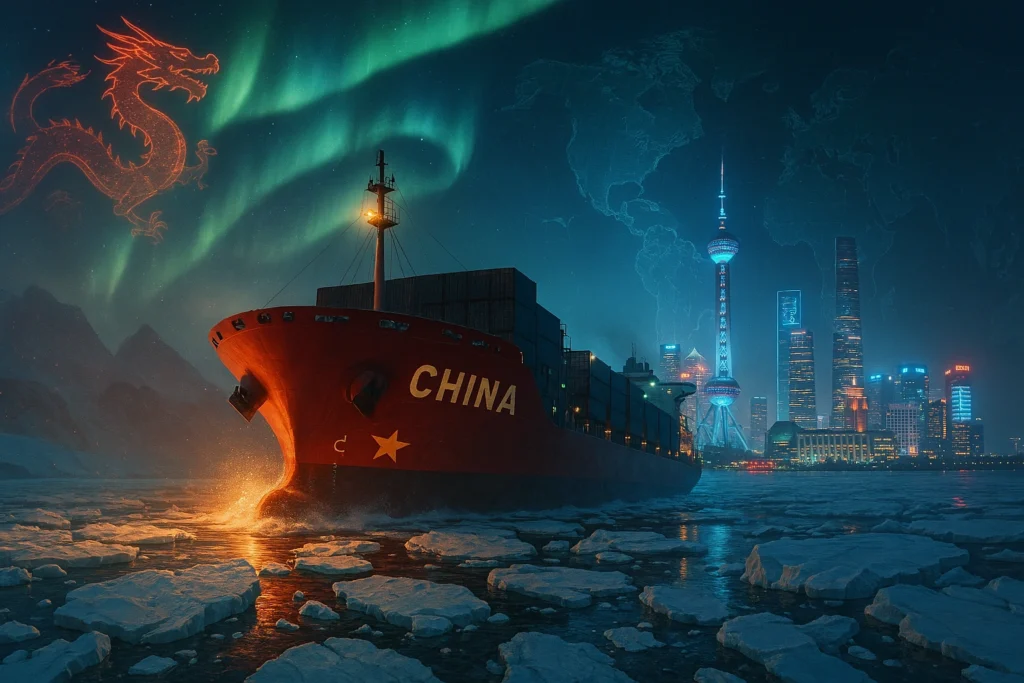
There is a deeper context that official statements obscure. The Strait of Hormuz has been effectively blocked since February 28, 2026, when the United States and Israel launched an air war against Iran and killed Supreme Leader Ali Khamenei. Wikipedia In retaliation, Iran’s Islamic Revolutionary Guard Corps issued warnings forbidding passage, launched dozens of confirmed attacks on merchant ships, and reportedly laid sea mines throughout the waterway. What emerged in the subsequent weeks was something novel and sinister: a de facto “toll booth” regime in the Strait of Hormuz, requiring vessels to submit full documentation, obtain clearance codes, and accept IRGC-escorted passage through a single controlled corridor, CBS News with payments in Chinese yuan of up to $2 million per vessel.
Iran, in short, had turned the world’s most critical energy artery into a private revenue stream — and a geopolitical weapon aimed squarely at the economies of U.S. allies while favoring Beijing and New Delhi. Trump’s blockade is, at its core, a response to that outrage.
Strategic Masterstroke or Strategic Overreach?
Let us give the administration its due. The logic of the blockade is not incoherent. It is, in fact, a form of strategic judo.
Iran had been exploiting a perverse asymmetry: it was extracting billions in “tolls” from Chinese and Indian tankers while simultaneously holding U.S. allies in Europe and Asia hostage to soaring energy prices. Trump himself articulated the calculus clearly on Fox News: “We’re not gonna let Iran make money on selling oil to people that they like and not people that they don’t like. It’s gonna be all or none.” The National
The blockade flips the equation. If no ship passes — not Chinese, not Indian, not European — then Iran’s leverage evaporates. Its “toll booth” becomes worthless. Its oil exports, already crippled, go to zero. The economic vise on Tehran tightens catastrophically. The hope, evident in every line of Trump’s Truth Social posts, is that Iran will blink — that the combination of military devastation from Operation Epic Fury, the loss of oil revenues, and the threat of resumed strikes will force a return to the table on American terms.
Trump told Fox that the U.S. needs to “weather the storm” to prevent Iran from obtaining a nuclear weapon, arguing that energy prices will fall once the war is over. CNBC It is a classic Trump negotiating posture: maximalist pressure, theatrical bravado, a bet that the other side’s pain threshold is lower than your own resolve.
And yet. The risks are not theoretical. They are already visible, measurable, and deeply alarming.
The Oil Shock Scenario: Numbers That Should Keep You Awake
The scale of the disruption already underway is difficult to overstate. The Strait of Hormuz facilitates the transit of around 20 million barrels of oil per day, representing roughly 20% of global seaborne oil trade, primarily from producers like Saudi Arabia, the United Arab Emirates, Iraq, and Qatar. Wikipedia When the IRGC shut the corridor in early March, the consequences were almost instantaneous.
Following the closure, Brent Crude surged past $120 per barrel, forcing QatarEnergy to declare force majeure on all exports. The oil production of Kuwait, Iraq, Saudi Arabia, and the United Arab Emirates collectively dropped by a reported 6.7 million barrels per day by March 10, and by at least 10 million barrels per day by March 12. Wikipedia
By early April, physical Brent had touched a staggering $150 per barrel, and shipping containers were being rerouted around the Cape of Good Hope, adding weeks to transit times and billions to global trade costs. FinancialContent
The Federal Reserve Bank of Dallas has modeled the economic damage with precision. A closure of the Strait of Hormuz that removes close to 20 percent of global oil supplies from the market during the second quarter of 2026 is expected to raise the average WTI price of oil to $98 per barrel and lower global real GDP growth by an annualized 2.9 percentage points. Dallas Fed That was the baseline before Trump’s blockade announcement — which has now added a new layer of uncertainty to every energy market on earth.
| Scenario | Brent Crude Estimate | Global GDP Impact | Probability (as of April 12) |
|---|---|---|---|
| Rapid Iranian capitulation (weeks) | $110–$120/bbl | -1.2% annualized | 20% |
| Prolonged standoff (3–6 months) | $150–$170/bbl | -2.9% to -4.5% annualized | 55% |
| Military escalation / infrastructure strikes | $180–$200+/bbl | Stagflationary shock | 25% |
U.S. government officials and Wall Street analysts are already considering the prospect that oil prices might surge to an unprecedented $200 a barrel. In conversations with more than three dozen oil and gas traders, executives, brokers, and shippers, one message has been repeated: the world still hasn’t grasped the severity of the situation. Many drew parallels with the 1970s oil shock, warning a prolonged closure would threaten an even bigger crisis. Bloomberg
Geopolitical Fallout: China, India, Europe, and the GCC
Trump’s blockade is not merely an energy story. It is a geopolitical reorganization in real time, and every major power is recalculating its position.
China faces the most acute strategic dilemma. Beijing had been the primary beneficiary of Iran’s toll regime, with Chinese tankers among the few granted preferential passage. Trump has now threatened to impose a 50% tariff on Chinese imports if Beijing tries to help the Iranian military. CNBC That threat — levied on top of an already fractious trade relationship — places Xi Jinping in an extraordinarily difficult position: back Iran and face trade war escalation, or acquiesce to a blockade that cuts off a critical energy corridor. China holds significant strategic crude reserves accumulated during a period of global oversupply, providing a short-term buffer — but positioning Beijing as a potential re-exporter to third markets if the supply crunch deepens. Kpler
India is caught in a vice. About 60% of India’s oil imports come from the Middle East, according to UBP. A sustained blockade would therefore amplify both energy import costs and current account pressures. More than half of its LNG imports are Gulf-linked, creating a dual physical and financial shock. CNBC New Delhi has been walking an extraordinary diplomatic tightrope — maintaining ties with Tehran, Washington, and Riyadh simultaneously. That balancing act is now existentially under strain.
Europe is arguably the most economically vulnerable. The conflict coincided with historically low European gas storage levels — estimated at just 30% capacity following a harsh 2025–2026 winter — causing Dutch TTF gas benchmarks to nearly double to over €60/MWh by mid-March. The European Central Bank postponed its planned interest rate reductions on March 19, raising its 2026 inflation forecast and cutting GDP growth projections, with economists warning that energy-intensive economies face high risks of technical recession. UK inflation is expected to breach 5% in 2026. Wikipedia
European airports have begun rationing jet fuel. Italy has placed restrictions on jet fuel at four airports in Bologna, Milan, Treviso, and Venice, while Ryanair CEO Michael O’Leary has predicted summer cancellations of 5 to 10% of flights if the Strait remains closed. Time
The GCC states face an existential paradox: they are simultaneously the world’s primary oil producers and, in the case of Qatar and the UAE, among the most dependent on the Strait for food and water security. The maritime blockade has triggered a “grocery supply emergency” across Gulf Cooperation Council states, which rely on the Strait for over 80% of their caloric intake. By mid-March, 70% of the region’s food imports were disrupted, with retailers forced to airlift staples and consumer prices spiking 40 to 120%. Wikipedia
Historical Parallels and Their Limits
The 1973 Arab oil embargo is the reference everyone reaches for, and with reason. The OPEC production cuts that year removed roughly 5 million barrels per day from global supply — about 7% of consumption at the time — and caused oil prices to quadruple. The resulting stagflation scarred the Western economies for a decade.
What is happening in the Strait of Hormuz in 2026 is, in raw volumetric terms, potentially far more severe. The 1973 embargo was politically motivated but geographically contained. The Hormuz crisis affects a chokepoint through which nearly a fifth of all globally traded oil flows — and, crucially, around 20% of global LNG, a commodity for which there is no alternative pipeline route out of the Persian Gulf.
The “Tanker War” of the 1980s, when Iraq and Iran attacked each other’s oil shipping during their grinding conflict, provides another partial parallel — but even that crisis never achieved a full closure of Hormuz. The nearest historical precedent for what is unfolding today may be the 1979 Iranian Revolution, which removed Iranian production from the market and contributed to a doubling of oil prices. Even then, alternative supply filled the gap over 12 to 18 months.
The difference today is that the U.S. blockade, if sustained, threatens to remove not just Iranian barrels but the entire Persian Gulf’s export corridor simultaneously. This is territory without precise historical parallel.
What Happens Next: Three Scenarios
Scenario One: The Iranian Blink (probability: 20%). Faced with total economic isolation, a devastated military, and the prospect of resumed U.S. strikes — Trump explicitly warned the Navy is “LOCKED AND LOADED” to “finish up the little that is left of Iran” — the Islamic Republic concludes it has run out of leverage and returns to negotiations on terms closer to Washington’s. The Strait reopens within weeks. Oil prices fall sharply. Trump claims a historic victory. This scenario requires Iran’s leadership to conclude that regime survival trumps nuclear ambition. Given Tehran’s 40-year investment in its nuclear programme as the ultimate insurance policy against regime change, this is the least probable outcome in the near term.
Scenario Two: Prolonged Standoff (probability: 55%). Neither side capitulates. The blockade holds; mines are gradually cleared; occasional skirmishes occur between U.S. and Iranian naval assets. Oil prices stabilize at painfully elevated levels between $140 and $170 a barrel. The global economy absorbs a severe but not civilization-ending shock. Back-channel diplomacy — through Oman, Qatar, or Pakistan — eventually produces a face-saving formula. This drags on through the summer, with enormous human and economic cost.
Scenario Three: Escalation Spiral (probability: 25%). Iran strikes U.S. naval assets or allied energy infrastructure. U.S. retaliates against Iranian power plants or Kharg Island oil terminals. The conflict metastasizes into something far larger. If attacks move from obstructing shipping to targeting export infrastructure itself, the crisis could shift from a chokepoint disruption scenario to one involving direct losses of production and export capacity. Al Jazeera Oil at $200 is no longer a fringe forecast. Global recession becomes base case. The U.S. midterms of 2026 are fought on a backdrop of $7 gasoline and double-digit food inflation.
What Washington — and the World — Must Do
Here is where intellectual honesty demands a difficult admission: Trump’s blockade has a coherent strategic logic, but its execution will determine whether it is remembered as the act of pressure that finally broke Iran’s nuclear ambitions or as the trigger of the worst economic crisis in a generation.
The administration must immediately do what it has conspicuously failed to do: communicate a clear, credible off-ramp to Tehran. Coercive diplomacy works only when the coerced party can see a path to exit. Trump himself acknowledged that “most points were agreed to” in Islamabad — meaning the diplomatic distance between the parties is not unbridgeable. Axios A back-channel — Oman has played this role before — should be activated immediately with specific, achievable terms.
Washington must also urgently coordinate with allies. The G7 energy and finance ministers’ scheduled call is a necessary but insufficient first step. Europe needs coordinated strategic reserve releases, emergency LNG procurement from the U.S., and a coherent demand-reduction strategy. The International Energy Agency has already published guidance on demand-reduction measures including remote working and greater use of public transport. Some nations have begun taking action: the Philippines has implemented a temporary four-day week. Bloomberg This needs to be a globally coordinated program, not a patchwork.
And China must be engaged, not merely threatened. Beijing holds genuine leverage over Tehran that Washington does not. A 50% tariff threat may be satisfying rhetoric; it is not a substitute for the kind of great-power bargain — U.S.-China coordination on Iran’s nuclear programme in exchange for mutual commitments on trade stabilization — that could actually shift the calculus in Tehran.
The Strait of Hormuz is 21 miles wide at its narrowest point. It is, in geological terms, a sliver of water. But as this crisis has made viscerally clear, it is also the jugular vein of the global economy. Trump’s blockade has seized that vein. The question is whether Washington has the strategic sophistication — beyond Truth Social posts and Fox News declarations — to use that leverage wisely, before the patient goes into arrest.
The clock is ticking. So, increasingly, is the meter on your next tank of gas.